One of the most common questions we hear from new parents – and from parents of toddlers who somehow haven’t made it in yet – is a simple one: when does my child actually need to see a dentist? It seems like it should have an obvious answer. It doesn’t, and that’s not your fault. The guidance has shifted over the years, and plenty of well-meaning family members will confidently give you the wrong timeline.
The short answer is earlier than most people expect. The right age for a child’s first dental visit is within six months of their first tooth coming in, or by their first birthday – whichever comes first. That’s the recommendation from the American Academy of Pediatric Dentistry (AAPD), and it’s one we follow closely at Little Pearls Pediatric Dentistry.
Here’s what you need to know – and what to expect when you walk through our doors in Manchester.
Why the First Dentist Visit Age Is Earlier Than You Think
Many parents assume the first dental visit can wait until their child has a full set of teeth, or until they’re old enough to sit still in a chair. That instinct is understandable, but it leaves a significant window unmonitored.
Baby teeth begin erupting as early as six months, and tooth decay can begin the moment a tooth appears. According to the CDC, tooth decay is one of the most prevalent chronic diseases among children in the United States – more common than asthma. Early visits allow us to establish a baseline, identify risk factors unique to your child, and give you practical tools before problems have the chance to develop.
There’s also a less clinical reason to start early: familiarity. Children who visit the dentist before they have any reason to feel anxious tend to build a very different relationship with dental care than those whose first visit involves discomfort or treatment. That foundation of trust is something we invest in deliberately here – it shapes how your child feels about their oral health for years.
Why Baby Teeth Matter More Than You Might Think
We hear this one often: “Does it really matter? They’re going to lose those teeth anyway.”
It matters quite a bit. Baby teeth – called primary teeth – are not just placeholders. They help your child chew, speak clearly, and maintain the proper spacing that guides permanent teeth into their correct positions. When a primary tooth is lost too early due to decay or infection, neighboring teeth can drift and crowd the space, creating alignment issues that may require orthodontic correction later.
Research published through the National Institute of Dental and Craniofacial Research (NIDCR) shows that roughly half of children between ages six and eight have had at least one cavity in their primary teeth. Children who experience decay in baby teeth are also significantly more likely to develop cavities in their permanent teeth. This isn’t meant to alarm you – it’s meant to give you a clear picture of why early monitoring and prevention are so worthwhile.
If you’ve been putting off scheduling because you assumed baby teeth weren’t a priority, this is a reasonable time to reconsider. Our infant dental exams are gentle, efficient, and designed with both parent and baby in mind.
What Happens at a Child’s First Dental Visit
A lot of parents come in wondering whether they’ve made a mistake scheduling so early. They picture something procedural and stressful. What actually happens at a first visit – especially for infants and toddlers – is much gentler and more conversational than most families expect.
Here’s what a typical first visit at Little Pearls looks like:
- A warm welcome and intake review – Dr. Mary Margaret will go through your child’s medical and dental history, noting anything that might be relevant to their oral health.
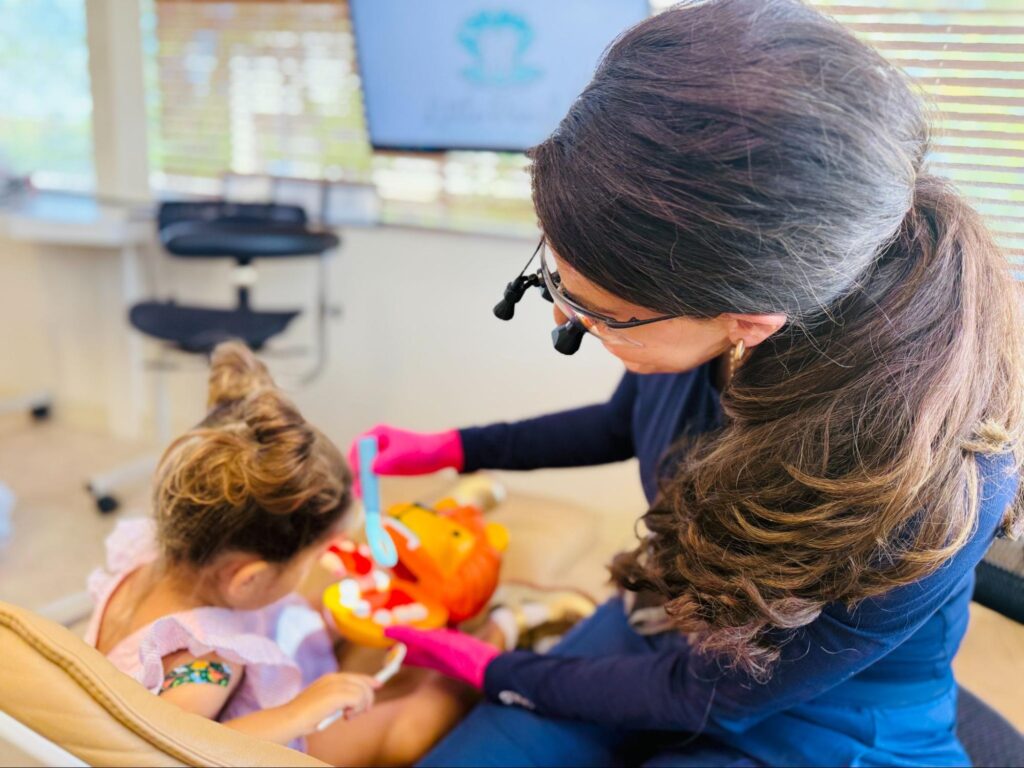
- A gentle oral exam – For infants, this is often a “knee-to-knee” exam where your baby rests on your lap and Dr. Mary Margaret takes a look at the gums, any erupted teeth, and surrounding tissues to assess growth and development.
- A conversation, not just a checkup – We spend time talking with you. What toothpaste should you be using, and how much? Is it normal that your child is grinding their teeth? How do you handle brushing when they won’t cooperate? These are real questions with real answers, and we address all of them.
- Preventive guidance – Depending on your child’s age and what we observe, we may discuss fluoride varnish, feeding habits, pacifier use, thumb-sucking, and what the schedule for future visits should look like.
For infants, x-rays are generally not taken unless something specific warrants a closer look. For toddlers and older children, digital x-rays may be recommended based on tooth development and cavity risk – we use low-radiation technology and follow AAPD guidelines on when imaging is clinically appropriate.
You can learn more about what to expect before you arrive on our first visit page.
Infant Exams vs. Routine Exams: Understanding the Difference
As your child grows, the structure and focus of dental visits will evolve. It helps to understand what changes – and what stays the same.
Infant exams (typically for children under 12 to 18 months) are brief, parent-centered visits. The clinical exam itself takes only a few minutes. Most of the appointment is a conversation between you and Dr. Mary Margaret about home care, diet, habits, and what to watch for as more teeth come in. These visits lay the groundwork and establish your child’s individual risk profile.
Routine exams (for toddlers through teenagers) involve a more thorough clinical assessment. Dr. Mary Margaret will examine tooth-by-tooth alignment and gum health, review x-rays as indicated, assess the development of incoming permanent teeth, and make recommendations based on what she finds. This is also when treatments like dental sealants or fluoride varnish become particularly relevant – both are quick, painless, and meaningfully effective at preventing decay.
We also use tools like disclosing agents during visits with older children to make the invisible visible – showing them exactly where plaque is hiding and teaching them why certain areas of the mouth need extra attention during brushing. It turns a routine exam into a hands-on lesson, which tends to stick far better than a verbal reminder.
In our experience, children who are involved in understanding their own oral health – not just instructed to brush – develop habits that actually last.
How Often Should My Child See the Dentist After That?
Most children benefit from dental visits every six months. That said, frequency isn’t one-size-fits-all. Some children with lower cavity risk may do well with annual visits; children with higher risk – due to diet, oral habits, enamel development, or history of decay – may benefit from visits every three to four months.
The AAPD recommends that children at moderate to high cavity risk receive fluoride varnish application up to every three months, beginning as soon as the first tooth erupts. We follow this guidance and tailor our recommendations to each patient.
The practical benefit of consistent six-month visits is early detection. Cavities in baby teeth can progress quickly – what appears minor at one appointment can become a more significant issue in the span of months if left unaddressed. Catching problems early keeps treatment conservative and, in most cases, simpler for everyone involved.
Our routine exams are designed to be thorough, age-appropriate, and genuinely useful – not a formality.
How to Prepare Your Child for Their First Dental Visit
Preparation matters, and the approach depends on your child’s age.
For infants, there’s little preparation needed beyond arriving rested and fed. Bring any comfort items – a favorite toy or blanket can help.
For toddlers and preschoolers, how you talk about the visit in advance shapes how they arrive. A few things that genuinely help:
- Keep your language positive and matter-of-fact. “We’re going to meet a friendly dentist who’s going to count your teeth” is far more useful than reassurances like “it won’t hurt, I promise.”
- Avoid overloading them with detail. Short, simple, and calm works better than a lengthy explanation.
- Don’t share your own dental anxiety with them, even casually. Children absorb emotional cues quickly.
- Read books about dental visits beforehand if your child responds well to that kind of preparation.
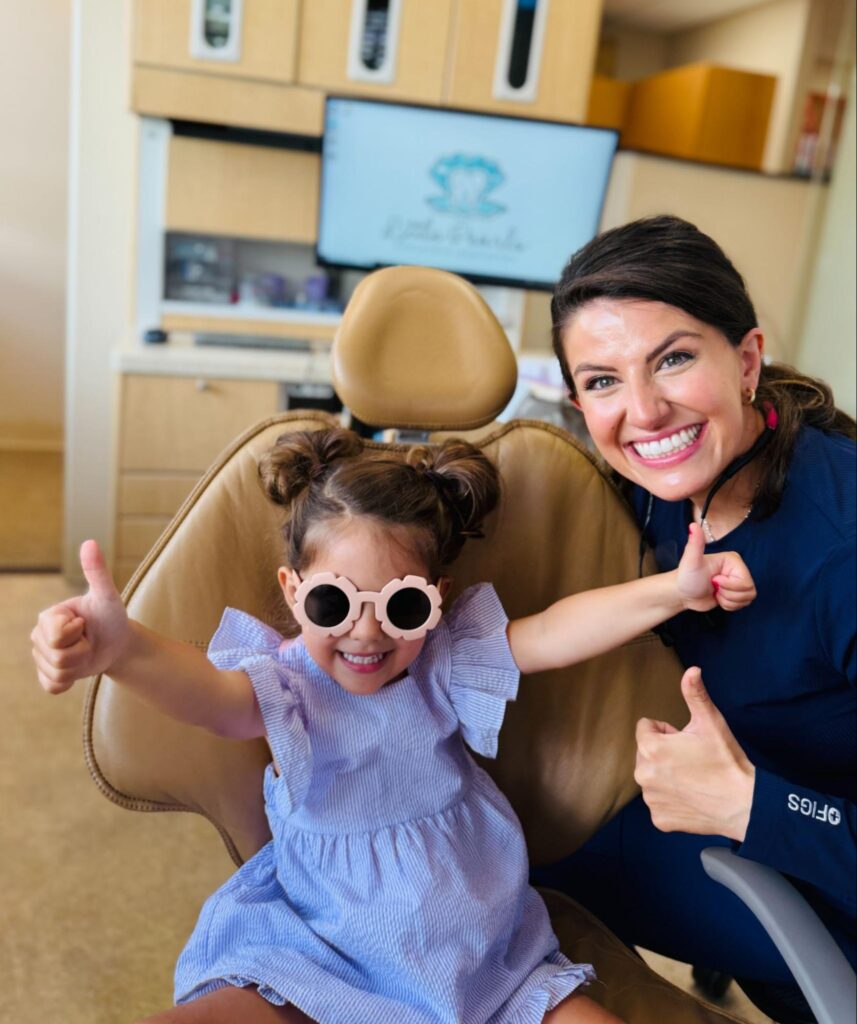
Once you’re here, our team takes it from there. Dr. Mary Margaret and our staff are specifically trained in behavior guidance for young patients – explaining each step in child-friendly language, moving at the child’s pace, and creating an experience that feels safe and even enjoyable. Our goal is that your child walks out feeling proud, not relieved.
If your child has specific sensory sensitivities or special healthcare needs, please let us know when you schedule. We offer specialized care for children with special needs and will prepare accordingly so the visit works for your child.
Why a Pediatric Dentist Makes a Difference
General dentists are trained to treat patients across all ages, but a pediatric dentist’s entire clinical focus, continuing education, and practice environment is built around children. The difference isn’t just one of preference – it’s one of depth.
Dr. Mary Margaret Kratz completed her undergraduate degree in Chemistry and her Doctorate of Dental Surgery at the University of Missouri-Kansas City before going on to complete specialized pediatric dental training at Cincinnati Children’s Hospital Medical Center, one of the country’s most respected pediatric programs. That training covers child development, behavior guidance, anxiety management, early intervention for developmental concerns, and care for children with complex medical histories and special needs – knowledge that a general dentist does not receive through standard dental education.
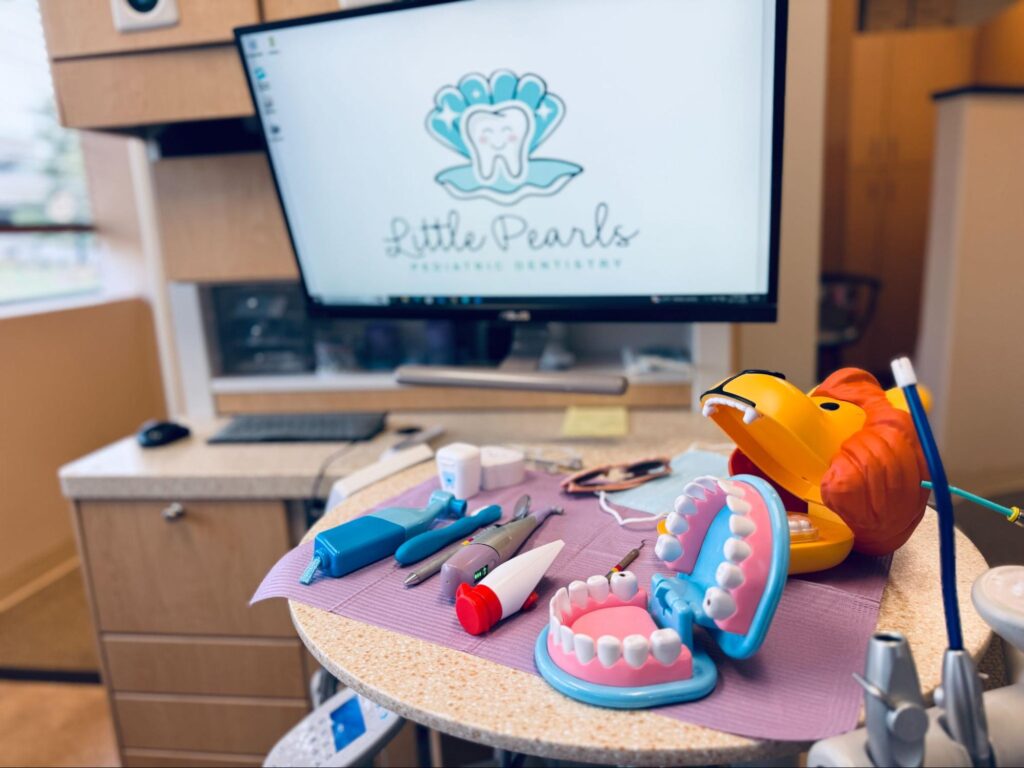
The clinical setting also matters. Our Manchester office is designed to feel welcoming and calm for children. Familiar anxieties – strange equipment, clinical sounds, unfamiliar faces – are addressed through the physical environment and through the way our team communicates at every step. When a child’s first dental experiences feel positive and safe, it shapes their relationship with oral health for the rest of their life.
Ready to Schedule Your Child’s First Visit?
If your child has their first tooth and hasn’t seen a dentist yet, now is the right time. If they’re already past their first birthday and you’re just getting started, that’s okay – what matters is that you start. Our team serves families throughout the Manchester and greater St. Louis area, and we are happy to answer any questions before you book.
You can reach us by phone at (314) 343-1037 or send us a message through our contact form – a member of our team will be in touch promptly. We also accept a wide range of insurance plans and offer Cherry financing for families who need flexible payment options.
Every child who comes through our doors is a little pearl. We’d be honored to be part of your child’s story.
Frequently Asked Questions
What is the recommended age for a child’s first dentist visit?
The American Academy of Pediatric Dentistry recommends a child’s first visit occur within six months of their first tooth erupting, or no later than their first birthday. Starting early allows us to establish a baseline, identify any risk factors, and give parents practical guidance before problems develop.
What if my child is already two or three years old and hasn’t seen a dentist yet?
It’s not too late – what matters most is getting started. We welcome children at any age and will tailor the visit to wherever your child is developmentally. If it’s been a while, we’ll do a thorough exam and work with you to establish a good routine going forward.
Do infant dental visits actually include any treatment?
Typically, no treatment is needed at an infant exam. The visit focuses on a gentle oral assessment, a review of your baby’s tooth development, and a conversation with you about home care, feeding habits, and teething. Fluoride varnish may be applied if indicated.
How do I prepare my toddler for their first dental visit?
Keep it simple and positive – a brief, calm explanation works better than an extended preview. Avoid language that introduces fear or negative expectations. Books about visiting the dentist can help some children warm up to the idea. Once you arrive, our team takes over the process with age-appropriate explanations and a pace that respects your child’s comfort level.
Will my child need x-rays at their first visit?
For infants and very young children, x-rays are generally not taken unless the dentist observes something that requires further evaluation. For older children, digital x-rays may be recommended based on tooth development and cavity risk. We use low-radiation technology and follow AAPD guidelines to ensure x-rays are only taken when clinically warranted.
How often should my child see the dentist after that first visit?
Most children benefit from visits every six months. Some children with higher cavity risk may need to be seen more frequently – up to every three to four months. We’ll assess your child’s individual risk at their visit and give you a clear recommendation for their schedule going forward.